
Flour Has Flavor.
By Hayden Flour Mills • April 25, 2026 • 6 min read
Flour is one of those ingredients we tend to take for granted. It's a background player. A means to an end. You reach for it, measure it, mix it in, and move on.
But flour wasn't always a neutral, forgettable thing. Stone milled, freshly ground flour has a flavor all its own: nutty, complex, alive. The kind of flavor that makes a simple loaf of bread taste like something worth sitting down for.
That flavor didn't disappear because bakers stopped caring. It disappeared because of decisions made in industrial milling facilities, decisions driven by logistics and shelf life and profit margins, not by what tastes best in your kitchen.
We started Hayden Flour Mills because we wanted to bring that flavor back. The more we learn about what we lost, the more committed we are to seeing it revived.

There Were Once Thousands of Mills Like Ours. Then the World Changed.
In the mid-1800s, nearly 30,000 small community stone mills were woven into the fabric of American life. Almost every town had one. Farmers brought their grain, millers ground it fresh, and families baked with it that same week. The chain from field to table was short, local, and full of flavor.
That world is almost entirely gone now.
Today, those 30,000 community mills have been consolidated into roughly 500 massive industrial operations that supply the vast majority of flour in the United States. The scale is hard to wrap your mind around. A single industrial mill can process up to five million pounds of grain in a single day. In an entire year, we process less than 500,000 pounds. Total.
We share that not to make ourselves sound small, but because scale changes everything, including what ends up in your flour bag, and what doesn't.

White Flour Wasn't Always Ordinary. Once Upon a Time, It Was a Luxury.
Here's something that tends to surprise people: for most of human history, white flour was rare. Precious, even. Sifting the pure white endosperm away from stone-ground grain by hand was painstaking, labor-intensive work, which made white flour a luxury reserved for the wealthy.
That changed almost overnight in the late 1800s, when the invention of the high-speed steel roller mill made white flour fast and inexpensive to produce at scale. For structure and baking performance, it's genuinely useful — white flour brings strength and elasticity that whole grain flours alone can't always replicate.
What large-scale industrial milling couldn't easily preserve, though, was the germ. That small, oil-rich heart of the wheat berry is where most of the flavor lives. Over time, removing it so consistently from the food supply led to widespread nutrient deficiency, eventually prompting governments to require manufacturers to add synthetic vitamins back in. We find that quite remarkable: rather than simply leaving the goodness in, the decision was made to keep taking it out and add an artificial version back in.

Stone milling preserves the germ and bran where they belong: in the flour that is as flavorful as the grain itself. For some bakes, like quick breads, muffins, and pancakes, the leavening does the heavy lifting which means stone milled flour can stand on its own. For others, like sourdough bread or delicate pastries, blending stone milled flour with a clean, unbleached white flour is the best of both worlds: all the flavor and nutrients that whole grain flour brings with enough gluten strength to hold a proper rise.

Some of the Brands You Trust Most Might Not Be Milling Their Own Flour.
We didn't know this for years either. Some of the most trusted names in flour, the brands with prominent places on grocery store shelves and decades of loyal customers, don't actually own a single mill. They don't mill their own grain at all. They are, at their core, very successful marketing companies. The milling itself gets contracted out to massive industrial facilities, which mills commodity wheat to spec.
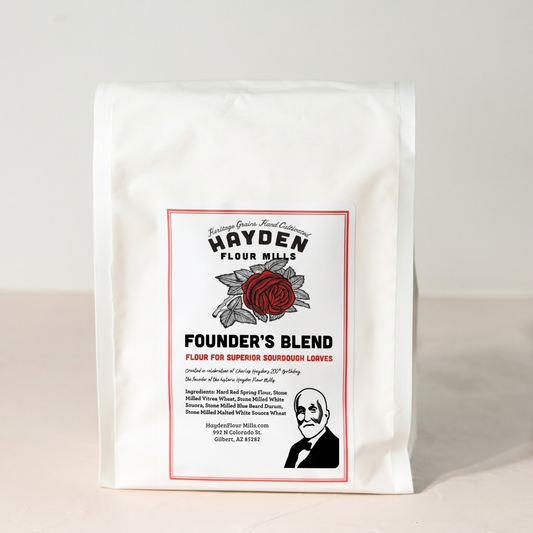
At Hayden Flour Mills, we source our grains from farmers we know by name, then stone mill and package everything fresh, just steps from the mill room. For blends like Artisan Bread Flour and All Purpose Flour, we partner with a local roller mill for our white baker's flour, custom milled to our specs (unbleached, untreated, and unenriched). From there, we work with award-winning bakers to dial in each flour blend: stone milled grain chosen for flavor, with just enough white baker's flour to get the performance right. We are, at our core, a flour mill, and everything we make starts and ends here.

What's Actually Inside a Standard Bag of Flour
We always encourage people to flip the flour bag over when shopping in their grocery store. Here's what you'll typically find in a standard commercial flour: the grain itself, stripped of its bran and germ, followed by a list of enrichment additives like niacin, iron, and or folic acid to name a few. Some flours include bleaching agents to achieve that stark white color, or enzymes to enhance baking performance.

But here's the part that most people never consider: reading the label only tells you half the story. Agricultural chemicals, including the herbicides sometimes sprayed on wheat crops just before harvest to speed up the drying process, are not classified as food ingredients. They don't have to appear on the label.
We get emails about this regularly. People who had sworn off wheat for years, baking with our flour and feeling fine. Whether it's the lack of additives, the freshness of the grain, or something else entirely, we can't say for certain. But we hear it often enough that it doesn't surprise us anymore.
This is exactly why we care so deeply about knowing our farmers, walking their fields, and understanding how their grain was grown before it ever reaches our mill stones. Stone milling makes clean flour. Clean flour makes tasty bread. It really is that simple.

Stone Milling Is a Craft. We'd Love for You to See What That Looks Like.
Inside our millhouse, our head miller Diego operates a beautiful large-scale stone mill imported from Italy, one that co-founder Jeff assembled himself, piece by piece, working from detailed technical schematics like a very serious, very expensive puzzle.
The stone milling process is nothing like industrial roller milling. Industrial mills run fast and hot, shearing grain apart at high speed. Our mill stones move slower and stay cool, which matters more than it might sound. The natural oils that we aim to preserve in the wheat germ are delicate. Heat destroys them, along with the flavor they carry. Cold milling keeps them alive and intact.
Diego stops the mill to adjust the stones between each grain variety, because different grains have different hardness and require different handling. Then he selects from a range of sifting screens depending on the final texture needed: a coarser grind for semolina, a finer screen for pastry flour. Every batch is an act of intention.
There are no shortcuts in this process. Slow food. Real flavor. That's the whole idea.
Heritage Grains Taste Like Something. That's the Whole Point.
Not all wheat is the same, and this is one of our favorite things to talk about.
Most modern wheat varieties are selected for how well they perform at scale: yield, uniformity, and predictability. Those are worthy goals. Flavor is simply a different goal, and one that heritage varieties were bred with in mind.
Heritage Grains were cultivated for something else entirely. White Sonora wheat, one of the oldest wheats in North America, is silky and mild with a quiet sweetness that makes it extraordinary in pastries, tortillas, and delicate quick breads. Rouge de Bordeaux traveled from France to find a home in Arizona soils, and it brought flavor with it: complex, toasty, and deeply satisfying in a long-fermented loaf. Einkorn, one of the oldest cultivated grains in the world, has a full, well-rounded flavor that makes even a simple pancake taste like something special.
These aren't novelty grains. They're the grains that fed the world before uniformity became the goal. We think they deserve to stick around.
Modern wheat was bred for yield. Heritage Grains were bred for flavor and personality. Click here to read more about our Heritage Grain varieties.

Long Fermentation Is Where the Real Magic Happens.
When to comes to sourdough baking, stone milled whole grain flour is only part of the story.
When you take freshly milled flour teeming with wild yeasts, add water, salt, and a vibrant starter, and give it 12 to 24 hours to simply do its work, something remarkable happens: the dough comes to life. Beneficial bacteria gradually break down complex proteins and starches, coaxing out layers of stone milled flavor that fast commercial baking could never rush into existence.

The bread on most grocery store shelves is leavened with commercial yeast in what you might generously call aggressive quantities, enough to guarantee a rise in about an hour, every time, at any scale. Yeast itself isn't the problem, a small sprinkling can give naturally fermented doughs a welcome lift. But when time is the constraint, slow fermentation gets left behind, and slow fermentation is where flavor lives. That's why so much commercial bread tastes the same.
A long-fermented loaf made with whole grain heritage flour is a completely different experience. It has character. It has depth. Time is an ingredient, and in every slice, you can taste the time itself.
In fact, many people who thought they had given up bread for good have found their way back to the table with long-fermented whole grain sourdough. We hear that a lot, and it's one of our favorite things about our work.
Ready to try it yourself? Our guide to baking with stone milled flour walks you through hydration, fermentation, and the small shifts in sourdough baking techniques that will help you make your best loaf yet.

We've Learned from Some of the Best in the Food World, and We Brought It Home to You.
Over the years, we've built real friendships with chefs and bakers who take their craft seriously. We visit their kitchens, ask a lot of questions, and take careful notes on exactly what they need from a flour, whether they're making a long-fermented country loaf, a delicate handmade pasta, or a wood fired pizza.

Some people we are proud to call friends. Pictured with co-founder Jeff Zimmerman: Louis Rodarte of Blue Watermelon Project, and James Beard Award winners Chef Charlene Badman of FnB and Baker Don Guerra of Barrio Bread.
Then we take everything we've learned and bring it straight to your kitchen.
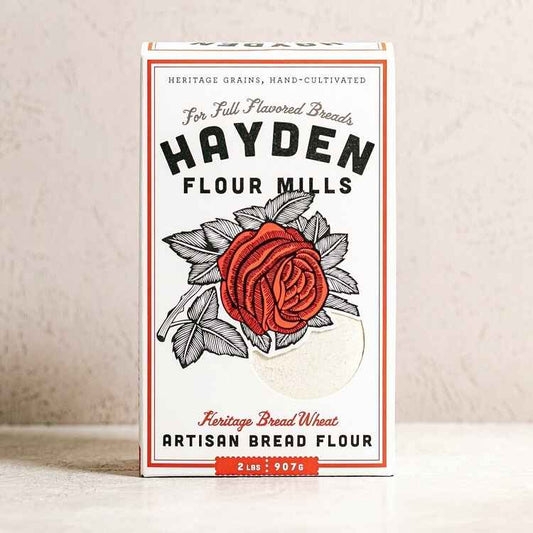
That's how products like our Artisan Bread Flour and All Purpose Flour came to be. Thoughtfully crafted blends designed to give home bakers the natural strength and rich heritage flavor of stone milled grain, without requiring years of experience to get beautiful results.
You are the baker. You create the food memories. We're just here to make sure the flour is worthy of what you're making. Learn how to bake bread with stone milled flour.

This Is the Flour We Wished We'd Had All Along.
We started Hayden Flour Mills because we believed the world deserved better flour. Grown with intention, milled with care, and full of flavor.
Every bag we mill is part of that mission. And everything you bake with it is proof that the flavor was always there, just waiting to come home.
We're glad you found us. Haven't baked with us yet? We think you're in for a really good surprise. Start with our most loved products and taste what flour is supposed to be.

More to explore: Explore recipes • Learn how to bake with stone milled flour