
What You'll Need
Leaven
15 g 100% hydration refreshed sourdough starter
35 g water
35 g Black Einkorn Flour
Dough
380 g water, tepid
10 g fine sea salt
250 g Black Einkorn Flour
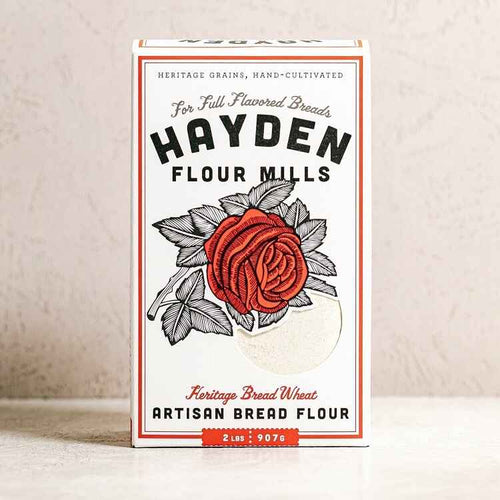
250 g Artisan Bread Flour
20 g toasted sesame seeds
Directions
Baking note: This dough is different from other doughs you may know: sticky and relaxed rather than smooth and springy. Let it be what it is and it rewards you with real flavor. Start the leaven in the morning, mix the dough in the evening, then shape it and let it rest overnight in the refrigerator. The next day, let the loaf finish proofing and bake it.
-
Prepare the leaven. About 8 to 12 hours before you make the dough, place the starter, water, and flour in a small bowl. Stir to combine, cover with a lid, and set aside to ferment at room temperature.
-
Mix the dough. Add the water and salt and stir to combine. Measure the flours into the bowl and using your hands, mix and squeeze the dough in a circular motion until no dry lumps remain. The dough will feel sticky and different from others you may have worked with. Cover and rest the dough for 30 minutes.
-
Stretch and fold every 30 minutes for 2 hours. Wet your hands and gently slide your fingers under the dough mass. Release the dough from the sides of the bowl and gently fold it to the center. Rotate the bowl and repeat 3 to 4 more times, until you have worked your way around the dough. Bulk ferment at room temperature for 2 hours, stretching and folding every 30 minutes. The dough will become smoother and more consistent in texture during this time, with a softer structure than other wheat doughs, true to einkorn's character.
-
Shape the dough. Fill a small bowl with water and set it to the side of your work surface. Grease a 9 x 5 x 2 3/4-inch loaf pan with butter or nonstick baking spray and set aside. Dust your work surface with flour, and using a bowl scraper, turn the dough out onto the work surface. Pat the dough into a rectangle and using a bench knife to assist, if necessary, stitch the dough to the center: pull the sides to the middle in an overlapping manner to gain tension on the dough. When you reach the bottom, roll the dough into a log, tucking as you go. Cover lightly and set aside to relax for about 10 minutes. To final shape, turn the dough over, seam side up, and roll from the top down, tucking as you go to create tension. The dough should be easier to shape. Tuck the ends under and using the bench knife, transfer the dough to the pan, seam side down. Cover with a dry tea towel and plastic and let the pan sit at room temperature for another 30 minutes. Transfer the pan to the refrigerator and retard the loaf overnight. The next day, remove the loaf from the refrigerator and final proof at a warm room temperature of about 80°F for 3 hours. The loaf should appear domed and reach the top of the tin when it is ready to bake.
-
Preheat the oven. Place a shatter-proof roasting pan in the bottom of your oven and position a rack in the middle. Alternatively, if you have a large Dutch oven that will fit your baking pan, place it on the middle rack instead without the roasting pan. Preheat the oven to 450°F.
-
Bake the loaf. It is not necessary to score this loaf, however, if any bubbles appear on the surface while proofing, make sure to pop those using a toothpick before baking. Apply a stencil design to the loaf using a dusting of flour if desired. Place the loaf in the oven on the middle rack and carefully pour 3/4 cup of water into the roasting pan, being mindful of the steam. Or place the loaf in the Dutch oven and position the lid. Quickly close the oven door and bake with steam for 20 minutes before checking to see if any remaining water is in the pan and removing the pan if so. If using the Dutch oven, remove the lid. Continue baking for another 20 minutes or until the internal temperature reaches 210°F with an instant-read thermometer. The loaf will have a deep brown crust and the sides of the loaf will feel firm when gently squeezed in the hand. The loaf will not have much, if any, oven spring. If the thermometer reads the proper temperature but shows signs of gumminess on the wand, replace the loaf into the oven without the baking tin and continue baking for another 5 to 7 minutes.
-
Cool and store the loaf. Remove from the oven and transfer to a wire rack to cool completely before slicing. Wrap in a beeswax-lined cloth and store at room temperature for up to one week.
Makes 1 loaf
Recipe contributed by Sarah Owens.