
Read Your Flour Bag Right: What Protein Really Tells a Bread Baker
By Hayden Flour Mills · September 29, 2026 · 4 min read
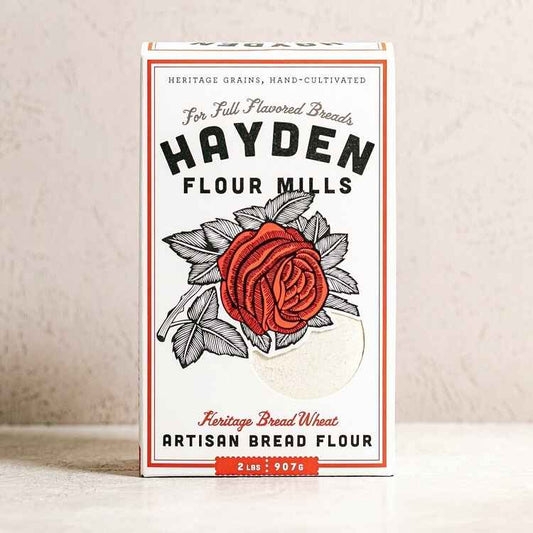
You're looking at our product and see two protein numbers and something doesn't add up. You see 12.1% protein content on the front of our Artisan Bread Flour bag. Yet the Nutrition Facts panel says 4g, or 6% of your daily value. So which one is right, and do these numbers really tell you?
Both numbers are true. They're just answering two different questions.

What the Two Numbers Are Actually Saying
The percentage of protein content, listed on our product pages for every baking flour, describes the flour itself: how much of its weight is protein. Bread bakers read it as a clue to how strong a dough the flour can build.
The Nutrition Facts protein number tells you how much protein is in one serving, which is useful for tracking your daily nutrition intake. It's not meant to tell you anything about how that flour will perform in a dough. For that, a baker looks at the protein percentage instead.
In short, the Nutrition Facts label is written for eaters. The percentage of protein content is written for bakers.
It's a number we take seriously. We send every one of our baking flours to the California Wheat Commission's lab to be professionally tested for protein content and other specifications that describe how the flour will act in dough. Think of it as reading the almanac before you plant your garden. Not a precise prediction, just a little foreknowledge.
But after years of milling and baking, here's what we've learned. Protein percentage is useful. It just isn't the whole story.
What the Number Promises
When it comes to baking flours, protein runs on a predictable scale. Cake flour sits around 7 to 10%, all purpose around 11 to 12%, and bread flour around 12 to 14%. American bread flour often runs high because much of it comes from hard red spring wheat. European wheat tends to run lower, yet French bakers turn out crackling baguettes every morning. A lower number doesn't mean no bread. It means different bread.
When wheat proteins meet water, they link into gluten, a stretchy web that traps the gas from your starter. Higher protein generally means a stronger web that holds gas, handles wetter dough, keeps its shape, and stands up to long, slow fermentation. Moderate protein balances strength and stretch for country loaves, sourdough, focaccia, and sandwich bread. Lower protein gives a softer, more tender crumb.
A baker reaching for a high protein bread flour isn't shopping for a nutrient. They're shopping for performance. So you might wonder why bother with anything else.

What Bread Flour Traded Away
Industrially milled hard red spring wheat is extraordinarily good at being bread flour: strong, predictable, and consistent. To get there, it keeps the starchy heart of the grain (the endosperm) and sets aside the bran and germ, and with them much of the grain's oils, minerals, fiber, and flavor: the character that makes one wheat taste different from another.
That character you find in the bran and germ is our whole world. Rouge de Bordeaux with its deep, earthy richness. White Sonora with its gentle sweetness. Blue Beard Durum with its soft honey. These are wheats worth tasting, and they turn every loaf into a small adventure.
Why We Blend
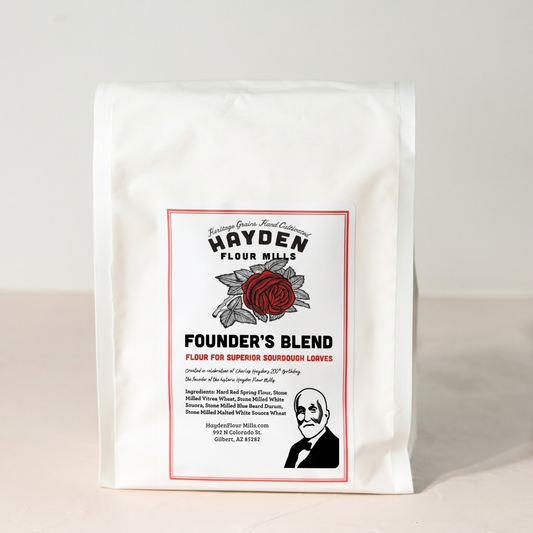
In our baking flour blends, we pair stone milled heritage or ancient grain flour with unbleached, unenriched bread flour. Unbleached means no chemical whitening. Unenriched means no synthetic vitamins or iron added back. It's simply clean, strong wheat, and it's the one ingredient built to do a single job well: giving your loaf the structure it needs to rise, hold its shape, and come out of the oven looking like the bread you set out to bake.
The heritage or ancient grain is doing different work entirely. It's where the flavor lives: the earthiness, the sweetness, the color and aroma that make one wheat taste different from another. A loaf made from nothing but unbleached, unenriched bread flour would rise beautifully and taste like very little. A loaf made from nothing but a delicate heritage grain might taste extraordinary but may fall short in the oven spring, especially in a home kitchen without years of practice behind it.
So we don't choose one over the other. We blend them, and we call it the radical center: enough whole grain to actually taste the grain, enough bread flour to keep the dough dependable. Think of it like a garden we've tended rather than left wild: all the flavor, none of the tears. You bring the hands and the patience. We blend the best of both worlds so the flour rises to meet you where you're at, so what comes out of your oven is post-worthy: a crumb with soft texture, a crust that wins compliments, whether it's your fiftieth loaf or your first.
Ready to taste the difference?

More to explore: How to Bake with Stone Milled Flour · Flour Has Flavor